
6.2 KiB
| icon |
|---|
| material/meditation |
Daily Sadhana
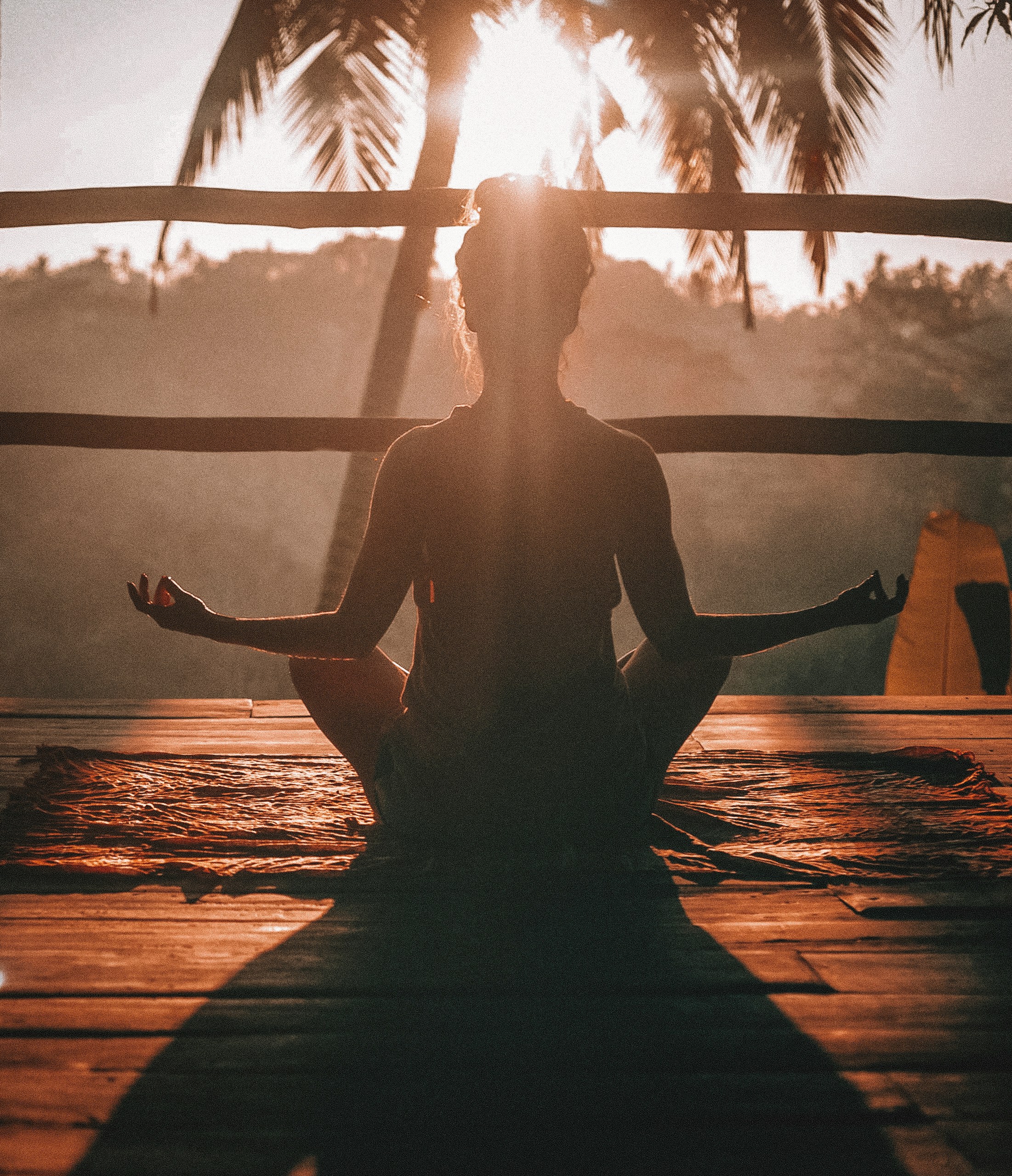
Sadhana means daily spiritual practice — not something you do when you have time, but the foundation you build everything else upon. The best time for spiritual practice is first thing in the morning, ideally waking 1 hour before sunrise. This is a time where the energy is more quiet as everyone is asleep. It allows you to be in a state of meditation during the 48 minutes surrounding sunrise, where the energy is in transition and so spiritual practice can have a greater impact.
Meditation
- Sit quietly for 5 minutes — your bed, a chair, a floor, anywhere
- Notice when the mind wanders and gently return to breath
- Do this every morning for one week
Start with five minutes. The mind will wander — that's what minds do. The practice is not emptying the mind but noticing when it has wandered and gently returning. Every return is a rep. Like any muscle, attention strengthens with use. The real practice is noticing the mind has repetitive thoughts and then gently guiding it back to the breath.
No app needed. No special cushion. A chair, a floor, a patch of grass — anywhere you can be still.
Zen
The word zen comes from the Sanskrit word dhyan, which loosely translates to meditation. But this process was looked at with unparalleled attention by the ancient Indian sages and the depth of their insights can only be tangentially grasped at by today's minds. See Patantali's Yoga Sutras if you'd like to go deeper.
Focus
There are a multitude of targets for our focus in meditation. We suggested starting with the breath as it is a simple and direct link to your soul and the universe. Every breath is an interchange of your being and the greater infinite oneness.
However you can also choose another singular focus to enable the mind to steady. These include a sound (mantra), a form (yantra). There are in total 108 ways to focus the mind and these are explored in the ancient text Vijnana Bhairav Tantra.
Gratitude journal
- Before bed or first thing, write down 3 specific things you're grateful for
- Do this every day for one week and notice the shift
Not generic blessings — specific moments. The warmth of sunlight through a window. A conversation that landed. The taste of a ripe fruit.
Gratitude is not toxic positivity. It is the deliberate practice of noticing what is already good, which rewires the brain away from its negativity bias over time.
Merit journal
The merit journal is an exercise I learned from Buddhist teachers who used it to reinforce positive character. You can write down the positive things you've done and reflect on these at times, especially before leaving the body at end of life. Our character is the one thing we take with us when we leave the body and so its especially valuable to reflect and cultivate upon this.
- Write an entry in your merit journal
Improvements journal
This is the inner work few want to do: asking honestly where you are still reactive and have work to do towards cultivating a harmonious and balanced character.
In almost all cases there is a time and place for an emotion or condition. Eg sometimes it is good to be lazy or impatient, and anger could be necessary to provoke action in certain cases. However in general we can reduce these distorted emotions (emotions can be considered energy-in-motion) and cultivate more their positive counterparts.
- Ask yourself: Where am I still carrying anger?
- Ask yourself: What am I afraid of?
- Ask yourself: How can I be more patient today?
- Replace one judgment with kindness today
Pick the most impactful one to focus on to start, generally anger. The goal is not to become perfect — it is to become less impulsive, more available, more unconditionally loving. Starting with yourself is key. Look at your thought patterns, and how you speak to yourself. Do you scold yourself if you make a trivial mistake? How could you extend and deepen your patience towards yourself?
??? question "A simple evening practice" Sit quietly and replay the day. Notice any moment where you contracted — irritation, defensiveness, avoidance. Don't judge the reaction. Just see it. Tomorrow, you'll have another chance. If you like you can journal your reflections and over time you may see just by noticing them things have started to resolve.
After reviewing the key area you'd like to work on you can use auto-hypnosis to improve it.
Movement: energy and strength
The body needs two kinds of movement every day:
Energy practice — yoga, tai chi, qigong, or simple stretching with breath awareness. This moves prana (life force) through the channels of the body. Even ten minutes shifts the nervous system from fight-or-flight to rest-and-digest.
- Do 10 minutes of energy practice this morning (yoga, stretching, tai chi)
- Do 20 minutes of cardio or strength work today
Cardio and strength — walking briskly, running, bodyweight exercises, lifting. The body evolved to move against resistance. Without it, the mind stagnates too. There are two kinds of cardio, low intensity (eg the energy practice or gardening) and high intensity (eg running, cycling, swimming or playing tennis) and both are necessary. High intensity means it raises your heart rate and makes you sweat.
Pair them. Energy practice in the morning to open; strength in the afternoon to ground.
Visualization: morning and night
- Spend 2 minutes each morning visualizing the future you want — see it as real now
- Spend 2 minutes before sleep visualizing the same — feel the gratitude as if it arrived
This is not magical thinking. It is the practice of orienting the subconscious toward what you are building, so that during the day, you recognize the doors when they appear.
Related: Finding Your Purpose — when sadhana meets direction.
What practice will you show up for tomorrow?