 0871b22709
- Rewrite index.md with human intro on consciousness, ascension, group origins
- Rename docs/teachings/ → docs/strategies/
- Move Spiritual Hygiene from strategies to practices
- Update all cross-references (teachings→strategies, inter-practice links)
- Update both index pages with new content and card grids
3.7 KiB
| icon |
|---|
| material/hand-heart |
Collective Awakening
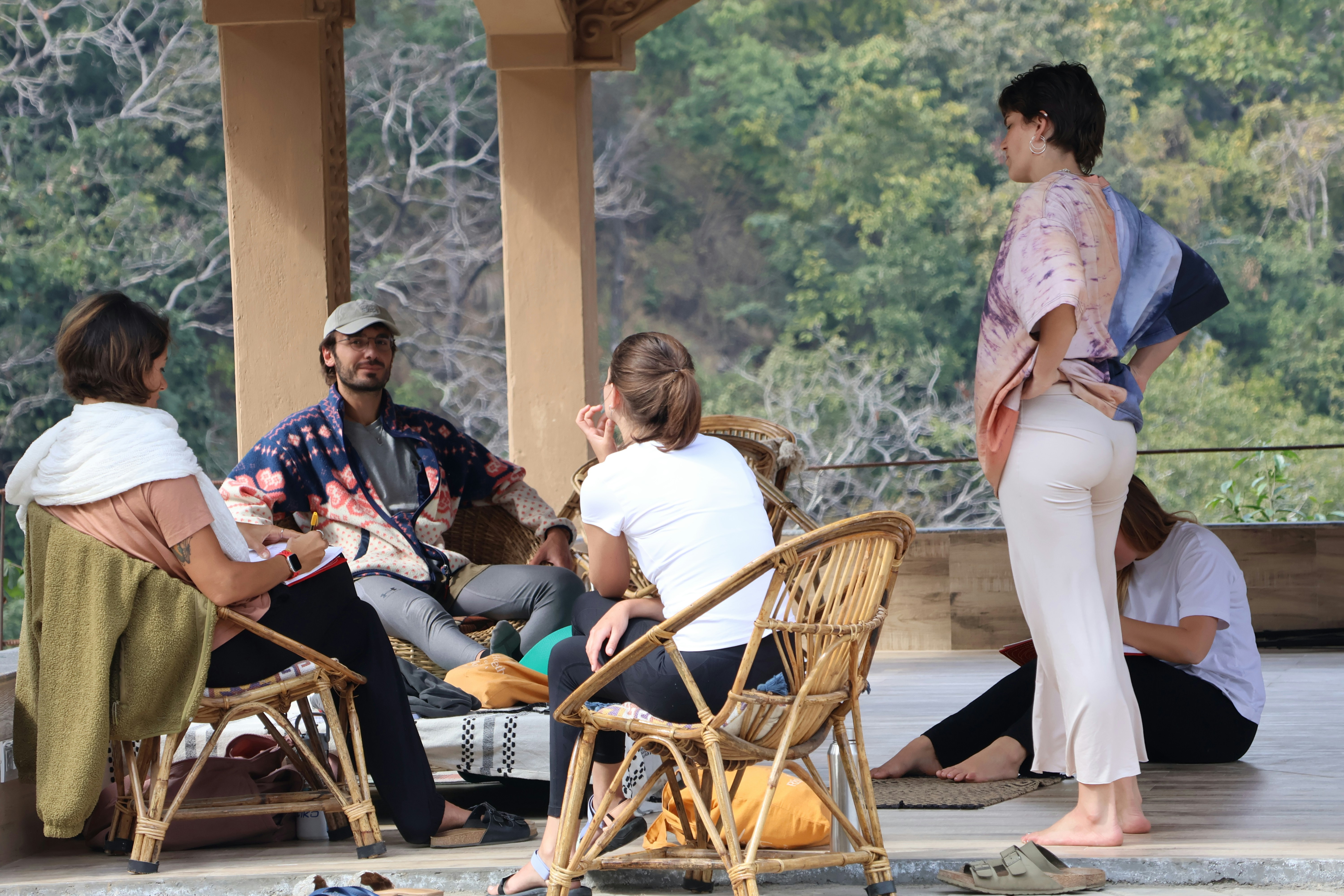
Awakening is often described as an individual journey, but it has never been a solo project. Consciousness shifts ripple through groups, communities, and fields — and when enough people hold the same frequency simultaneously, something in the collective field changes.
The power of mass intention
Decades of research on group meditation — particularly large Transcendental Meditation assemblies — has documented statistically significant reductions in crime, violence, hospital admissions, and traffic fatalities when a critical mass (roughly the square root of 1% of a population) meditates together.
The mechanism is debated. The data is not.
When you join a mass meditation — whether online or in person — you are not just calming your own nervous system. You are contributing to a field. The intention you hold for peace, for the most positive timeline, is not private. It radiates.
Creating your own circle
You don't need to wait for a global event. Gather two or three people and sit together:
- Start with silence — 5 to 15 minutes of shared stillness
- State an intention — "We are here for peace. We are here for the most positive timeline for humanity."
- Visualize together — describe, aloud or silently, what that world looks like, feels like, sounds like
- Close with sound — a bell, a chant, a simple "om"
Do it weekly. The consistency matters more than the size.
Crystallizing the vision
Between gatherings, make something tangible:
- Doodles or drawings — what does the peaceful world look like through your eyes?
- Written statements of intent — short, present-tense declarations: "Clean water flows freely. Children laugh without fear. Elders are honored. The land is tended."
- A shared board or album — where each person contributes their vision of the positive timeline
These artifacts are not wishful thinking. They are anchors. When the external world looks chaotic, the images and words you've created together remind you what you are building toward — and that you are building it together.
Conscious activism
Activism doesn't require anger. The most effective campaigns combine awareness with action:
- Awareness: educate your community — host film screenings, share resources, write clearly about what's happening
- Action: engage with key decision makers — local council members, school boards, community leaders
- Campaigns: focused efforts on specific issues — stopping a harmful development, protecting green space, defending digital rights
Do this offline where possible. Face-to-face relationships with decision makers are harder to dismiss than emails. And when you work alongside others in person, the trust built is its own reward.
The compass
Through all of this, hold a simple compass:
- Is this action arising from love or from fear?
- Is it connecting people or dividing them?
- Is it building something or only tearing something down?
Fear-based activism burns out. Love-based activism regenerates. The most radical thing you can do — genuinely radical — is to remain joyful while fighting for what matters.
Related: Spiritual Hygiene — keeping your own field clear so you can contribute cleanly to the collective.
What does the most positive timeline look like to you — in one sentence?