---
icon: material/crowd
---
# Community Sovereignty
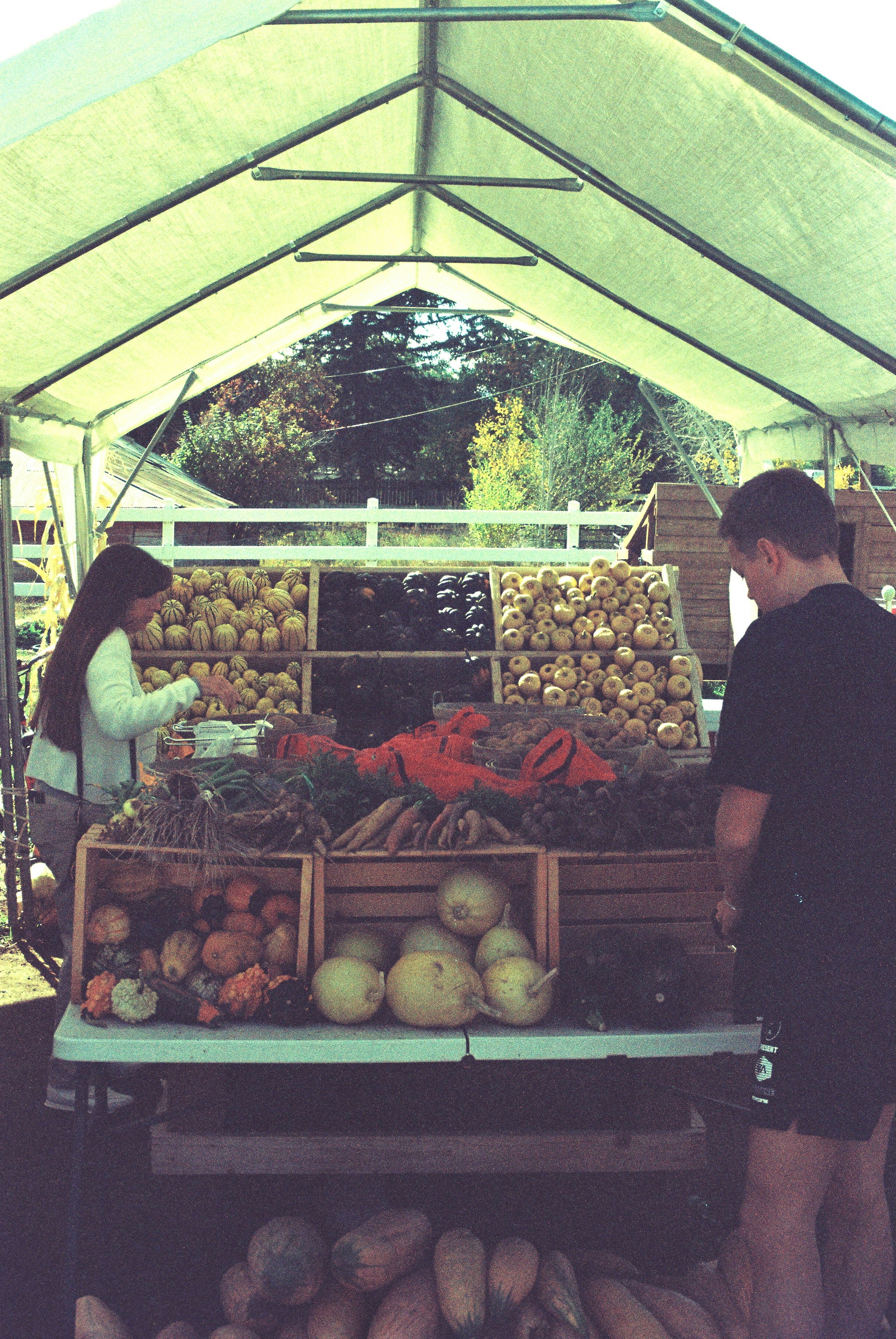
Photo by Spencer Plouzek on Unsplash
Sovereignty is not something you achieve alone. It is built in relationship — with the land, with the people who grow food, with neighbors who share skills, and with networks that operate outside the extractive economy.
---
## Food: know your farmer
Every dollar spent at a supermarket feeds a system designed to concentrate wealth and power. The alternative is older than capitalism: direct relationships with the people who produce what you consume.
- Join a local CSA (community-supported agriculture)
- Buy from farmers' markets — talk to the people behind the stall
- Trade skills: help with a harvest, offer web design, teach a class
- Grow something yourself, even if it's just herbs on a windowsill
When your food comes from someone you know, the transaction becomes a relationship. That relationship is the foundation of a parallel economy.
!!! warning "The monopoly problem"
[Watch this](https://www.youtube.com/watch?v=nLZV5EesNNI) to understand how deeply monopolized the food system is. The solution is not to find ethical products within the system — it's to build outside it.
---
## Private Members Associations and collectives
In many jurisdictions, Private Members Associations (PMAs) allow groups to operate outside the regulatory frameworks designed for commercial entities. They are not businesses — they are associations of people exercising their right to associate and self-govern.
PMAs can be used for:
- Education cooperatives outside state curricula
- Health collectives practicing natural medicine
- Legal support networks with aligned professionals
- Community asset ownership (land, equipment, housing)
Research what's possible in your jurisdiction. Find lawyers and politicians with genuine integrity — they exist, often working quietly — who can help push back on overreach in climate policy, health mandates, surveillance expansion, and data center proliferation.
---
## Seva: service without expectation
*Seva* is selfless service — giving without any expectation of return. It is the antidote to the transactional mindset that pervades modern life.
Start small:
- Cook a meal for someone who is struggling
- Sit and listen to someone who is lonely — just listen, no advice
- Clean a section of your local park or river
- Offer your skills (legal, technical, therapeutic) to those who cannot pay
Do three kind things every week that you tell no one about. The anonymity is part of the practice — it purifies the motivation.
---
## Building freedom networks
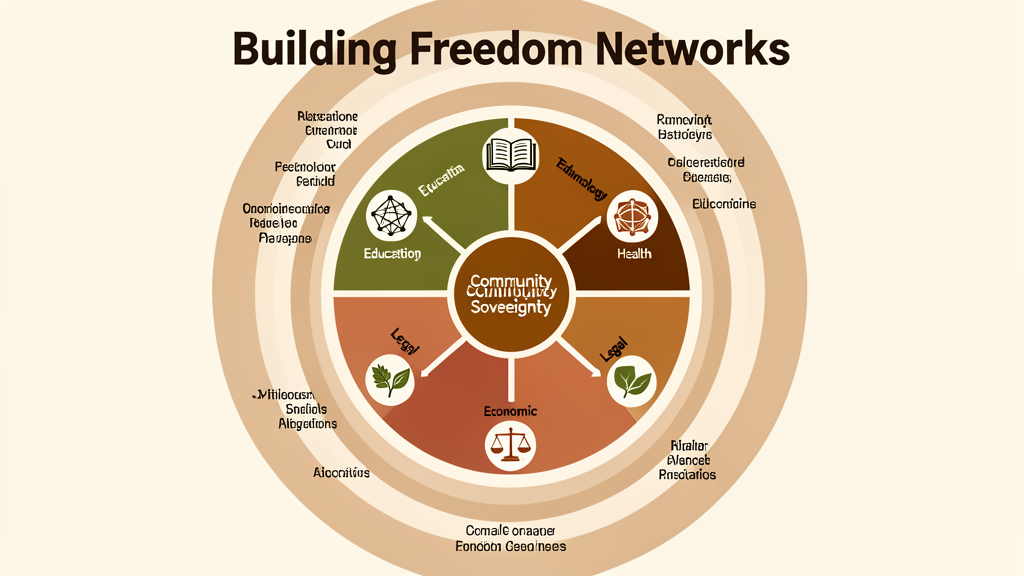
Generated with GPT-5.4-Image-2
Create community links — both offline and online — that support and develop:
| Domain | What to build |
|--------|--------------|
| **Education** | Study groups, skill-shares, unschooling collectives |
| **Technology** | Local mesh networks, open-source tooling, privacy workshops |
| **Health** | Herbal medicine circles, movement groups, mental/emotional/spiritual support pods |
| **Legal** | Network of integrity-driven lawyers, know-your-rights workshops |
| **Economic** | Barter networks, time banks, local currencies, PMAs |
The goal is not to secede from society. It is to build parallel structures so robust that when the extractive systems falter, communities don't.
---
## Legally minimizing extraction
Tax avoidance within the law is not evasion — it is resource sovereignty. Learn about:
- PMAs and trusts for collective asset holding
- Agricultural exemptions where applicable
- Non-profit structures for community-serving work
- Barter and gift economies that operate outside taxable transactions
Consult aligned professionals. The goal is to keep resources circulating within the community rather than being siphoned upward.
---
**Related:** [Digital Sovereignty](./digital-sovereignty.md) — because freedom networks need free infrastructure.
*Who in your community could you reach out to this week?*